
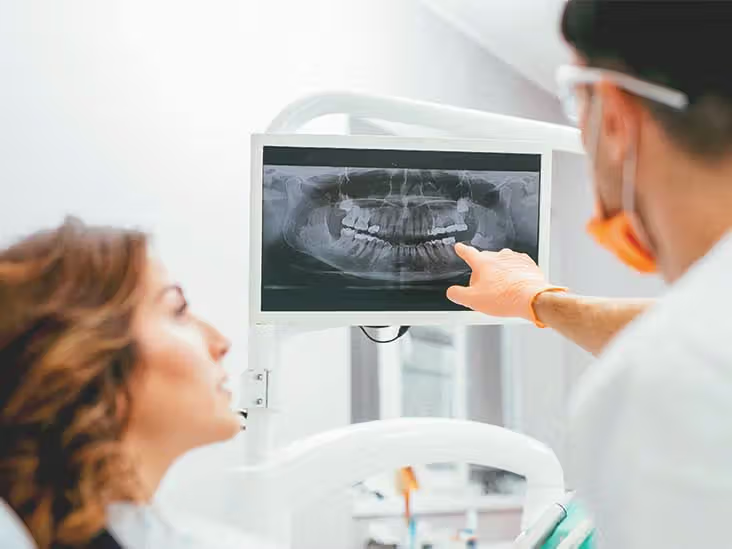
When you visit your dentist for a routine checkup, much of the appointment focuses on what can be seen with the naked eye. Your dentist examines your teeth, gums, tongue, and other soft tissues to check for visible signs of concern. However, not all dental problems are visible during a standard clinical exam.
At Linden Market Dental, dental X-rays play an essential role in preventive care. If you are visiting a Winnipeg Dentist for regular checkups, understanding what X-rays reveal and why they matter can help you feel more confident about your care.
Why Visual Exams Have Limitations
A clinical exam allows your dentist to evaluate the surfaces of your teeth and gums. Cavities on the chewing surfaces, gum inflammation, and obvious cracks may be detected this way. However, many dental problems begin below the surface or between teeth, areas that cannot be fully assessed without imaging.
Even with excellent lighting and magnification, certain structures remain hidden without radiographs.
Cavities Between Teeth
One of the most common conditions detected by dental X-rays is interproximal decay, which occurs between teeth. These cavities often develop in tight spaces where toothbrush bristles cannot easily reach.
Early-stage decay in these areas typically does not cause pain and cannot always be seen during a visual exam. Bitewing X-rays allow your dentist to identify decay before it progresses into a larger problem.
Early detection often means more conservative treatment and better long-term outcomes.
Bone Loss from Gum Disease
Gum disease affects not only the soft tissue but also the bone that supports your teeth. In its early stages, gum disease may cause mild bleeding or inflammation, but deeper bone loss is not visible during a routine exam.
Dental X-rays help measure bone levels around each tooth. This allows your Dental Clinic Winnipeg team to detect:
- Early signs of periodontal disease
- Areas of active bone deterioration
- Changes in bone density over time
Monitoring bone health is critical for preventing tooth loss and maintaining long-term stability.
Infections at the Root
An abscess or infection at the tip of a tooth’s root may not always show visible symptoms at first. Some infections develop quietly beneath the surface, causing gradual bone damage.
X-rays can reveal:
- Dark areas around root tips
- Signs of infection
- Failed previous root canal treatments
- Cysts or abnormal growths
Without imaging, these conditions could go undetected until pain or swelling occurs.
Impacted Teeth
Teeth that fail to erupt properly, such as wisdom teeth, often remain partially or fully embedded in the jawbone. These impacted teeth can cause crowding, infections, or damage to adjacent teeth.
X-rays allow a Winnipeg Dentist to determine:
- The position and angle of impacted teeth
- Whether removal is recommended
- Potential risks to nearby structures
Planning ahead helps avoid complications later.
Cracks and Structural Damage
Not all fractures are visible during a clinical exam. Hairline cracks may extend below the gumline or into the root structure. Dental X-rays can provide additional information when a tooth is symptomatic but appears normal on the surface.
While some cracks require specialized imaging for confirmation, traditional radiographs are often the first step in identifying structural concerns.
Developmental Concerns in Children and Teens
For younger patients, dental X-rays provide valuable insight into how permanent teeth are developing beneath the gums. They help detect:
- Missing permanent teeth
- Extra teeth
- Delayed eruption
- Alignment issues
Early detection allows for timely intervention and better treatment planning.
Evaluating Existing Dental Work
If you have fillings, crowns, bridges, or implants, X-rays help monitor the health of the surrounding tooth structure and bone.
They can detect:
- Recurrent decay under fillings
- Marginal breakdown around crowns
- Bone levels around implants
- Hidden issues beneath restorations
This ongoing monitoring ensures that previous dental work continues to function properly.
How Often Are Dental X-Rays Needed?
The frequency of X-rays depends on your oral health history, risk factors, and current condition. Patients with a higher risk of decay or gum disease may require more frequent imaging, while others may need them less often.
Your Dental Clinic Winnipeg provider will recommend X-rays only when necessary for diagnosis or monitoring.
Are Dental X-Rays Safe?
Modern dental X-rays use very low levels of radiation. Digital radiography further reduces exposure compared to older film-based systems. Protective measures such as lead aprons and thyroid collars are commonly used for added safety.
For most patients, the diagnostic benefits far outweigh the minimal risk associated with routine imaging.
The Value of Early Detection
Many dental conditions develop silently. By the time pain appears, the issue may already be advanced. Dental X-rays allow your Winnipeg Dentist to identify problems early, often before symptoms begin.
Early detection can mean:
- Smaller fillings instead of root canals
- Non-surgical gum therapy instead of advanced treatment
- Preventive planning instead of emergency care
If you have questions about dental X-rays or are due for a checkup, contact Linden Market Dental to schedule an appointment. A comprehensive exam combined with appropriate imaging helps protect your smile and maintain your oral health for years to come.