The thing about dental pain is that it arrives late
By the time a toothache wakes you up at 2 AM, the problem causing it has usually been quietly developing for months. Cavities do not start painlessly. Gum disease does not announce itself early. Infections building at the root of a tooth can go unnoticed for a long time, right up until they cannot.
This is exactly why dental X-rays are not just a routine box to check at your appointments. They are the tool that lets your dentist see what is happening before it becomes something you can feel. And that window, catching a problem when it is small, makes an enormous difference to how that problem gets treated.
What your dentist can actually see on an X-ray
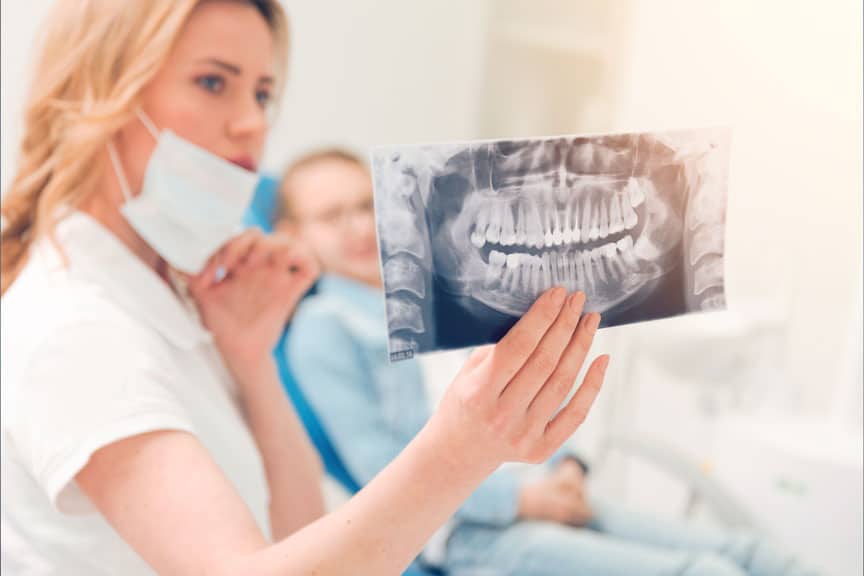
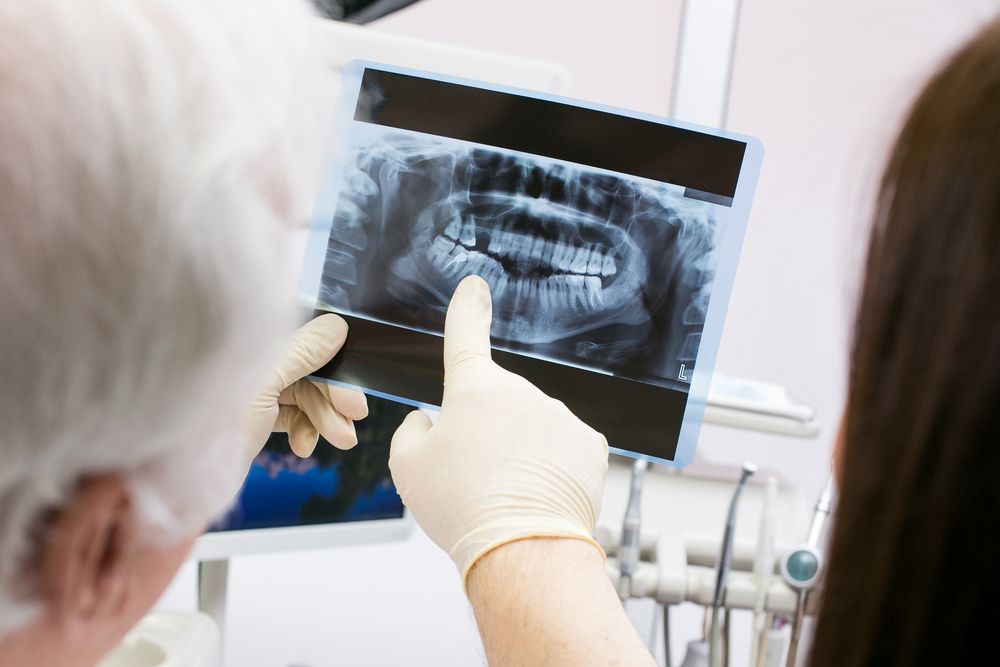
During a visual examination, your dentist can assess the surfaces of your teeth, the condition of your gums, and any obvious damage or changes in your mouth. But a significant portion of what goes wrong in a mouth happens where no one can see, without imaging. X-rays reveal the full picture.
Here is what your dentist is looking at on those images:
Cavities between teeth: The surfaces between teeth are where decay most commonly starts, and they are completely hidden from view during a visual exam. Bitewing X-rays, which show the upper and lower back teeth biting together, catch this interproximal decay early, often when it is still small enough to treat with a simple filling rather than something more involved.
Cavities beneath existing fillings: Old fillings can develop new decay underneath or around them. This is not visible during an examination but shows up clearly on an X-ray. Catching it early means the filling can usually be replaced before the decay reaches the nerve.
Bone loss from gum disease: Periodontal disease destroys the bone that anchors teeth in place. The gum tissue itself may look relatively normal in the early stages, but X-rays reveal the bone levels around each tooth. Detecting bone loss early is what gives treatment the best chance of stopping further progression before teeth become loose.
Abscesses and infections at the root: An infection developing at the root tip appears as a dark shadow on a periapical X-ray. Left untreated, a tooth abscess can cause severe pain, spread to surrounding bone, and, in rare cases, create systemic health risks. Catching it before symptoms appear makes treatment far simpler.
Impacted or unerupted teeth: Wisdom teeth that are trapped beneath the gum or positioned at an angle against neighbouring teeth are a common example. Panoramic X-rays show all the teeth and jaws in a single image, making it easy to assess whether an impacted tooth is causing or will cause problems.
Cysts and unusual growths: Cysts that form in the jawbone are often completely painless until they are large enough to displace teeth or weaken the jaw. X-rays can identify them early, long before any physical symptoms develop.
The difference in early detection actually makes
Dental problems are almost universally easier, less invasive, and less expensive to treat when they are caught early. That is not marketing language. It is just how dental disease works.
A small cavity caught on an annual bitewing X-ray might be resolved with a 30-minute filling appointment. That same cavity, if missed for another year or two, may progress deep enough to require a crown or root canal. A root canal that could have been avoided is months of appointments, significantly higher cost, and considerably more time in the chair.
The same pattern holds for gum disease. Early-stage gingivitis responds well to professional cleaning and improved home care. Advanced periodontitis with significant bone loss requires more intensive treatment and sometimes surgery. The jaw surgery the X-ray helped avoid is the procedure nobody wanted to need.
Regular X-rays are not about finding problems for the sake of it. They are about finding them when there is still a simple path forward.
Are dental X-rays safe?
This question comes up often, and it is a fair one to ask. The honest answer is that modern digital X-rays use very low levels of radiation, well within the range considered safe for routine dental care.
At Linden Market Dental Centre, we use digital dental X-ray technology throughout the office, which delivers less radiation than older film-based systems and produces images immediately on screen. A full set of dental X-rays exposes you to roughly the same amount of radiation you would receive during a short flight or a day of normal background environmental exposure.
We also use standard protective measures: a lead apron and, where appropriate, a thyroid collar are placed before any images are taken. We are thoughtful about how often X-rays are recommended for each patient and base that frequency on individual oral health history, age, and risk factors.
For most healthy adults, bitewing X-rays are taken approximately once a year. Patients with active gum disease, a history of frequent cavities, or other ongoing concerns may benefit from more frequent imaging. The schedule is always based on clinical need, not on a fixed routine.
How often should you have dental X-rays?
There is no single right answer for every patient. What we consider at Linden Market Dental are your age and stage of dental development, your history of cavities or gum disease, whether you have existing restorations that need monitoring, and the time since your last full set of records.
For children, X-rays are important for tracking tooth development and catching early decay in teeth that may not be fully cleaned by brushing alone. For adults with no active problems and good oral hygiene, once a year for bitewings and a panoramic image every few years is a reasonable baseline.
If you have not had X-rays taken recently, or if you are new to a dental practice, a baseline full set is usually the right starting point so the dentist has a complete picture to work from.
Why Winnipeg families trust Linden Market Dental
Linden Market Dental Centre has been serving families in Winnipeg for over two decades. Led by Dr. Morgan Winchar, our team provides comprehensive family and preventive dental care in a welcoming environment on Waverley Street. We offer a full range of services under one roof, from routine checkups, cleanings, and X-rays to restorative care, cosmetic treatments, gum disease management, and emergency care.
We are now proudly accepting patients under the Canadian Dental Care Plan (CDCP), and our team helps patients navigate insurance paperwork to make the process as straightforward as possible.
Whether you are overdue for a checkup or looking for a new dental clinic in Winnipeg for your whole family, we would be glad to welcome you.
Book your appointment in Winnipeg today
If it has been a while since your last set of dental X-rays, or if you have been putting off a checkup, now is a good time to get back on track. Catching a small problem early is always better than managing a painful one later.
Call us at (204) 487-2226 or book online at lindenmarketdental.com
Linden Market Dental Centre 7-877 Waverley St, Winnipeg, MB Monday to Wednesday: 8:00 AM to 5:00 PM | Thursday: 8:00 AM to 3:00 PM
We are accepting new patients and CDCP patients. Our team is here to help you stay ahead of problems before they start.