Most people considering dental implants in Winnipeg are thinking about the tooth itself: filling the gap, restoring the ability to chew normally, or improving how their smile looks. These are legitimate reasons. What gets discussed less often is what’s happening to the jawbone underneath that gap, and how that process relates to changes in facial appearance over time.
Bone loss after tooth loss is not a cosmetic issue waiting to happen. It’s a biological process that begins within weeks of an extraction and continues for years. Understanding it changes how you think about the timeline for replacing a missing tooth.
Why the Jawbone Depends on Tooth Roots
The jawbone is a living tissue that responds to the demands placed on it. Tooth roots transmit force into the bone during chewing. That mechanical stimulation signals the bone to maintain its density and volume. It’s the same principle that explains why weight-bearing exercise helps maintain bone density in other parts of the body.
When a tooth is extracted, the root is gone, and the stimulation stops. The bone in that area no longer receives the signal to maintain itself. Osteoclastic activity, the normal process by which the body resorbs bone that isn’t being used, begins to reduce the height and width of the alveolar bone, the part of the jaw that houses the tooth roots.
Studies in dental literature have documented that bone loss in the area of a missing tooth can be significant within the first year. Height and width reduction continue at a slower rate after that first year, but don’t stop entirely.
What This Means for Facial Appearance Over Time
The lower third of the face is supported by the teeth and the underlying bone. When bone volume is lost across multiple missing teeth or over a long period, the structural support for the overlying soft tissue changes.
The specific changes depend on which teeth are missing and how long the bone loss has progressed, but common patterns include:
- A reduction in the height of the jaw in the affected area, which can cause the lower face to appear shorter or more collapsed
- A deepening of the vertical groove between the nose and the corners of the mouth as the midface loses support
- Increased prominence of the chin relative to the rest of the face as the lower jaw’s proportions change
- Changes to lip support, particularly for missing upper front teeth, which can cause the upper lip to appear thinner or to retract
These changes happen slowly. They’re often most noticeable in patients who have been wearing full or partial dentures for many years, because dentures rest on the gum tissue and bone surface but don’t replace the root stimulus that maintains the bone underneath them.
How Implants Address the Bone Loss Problem
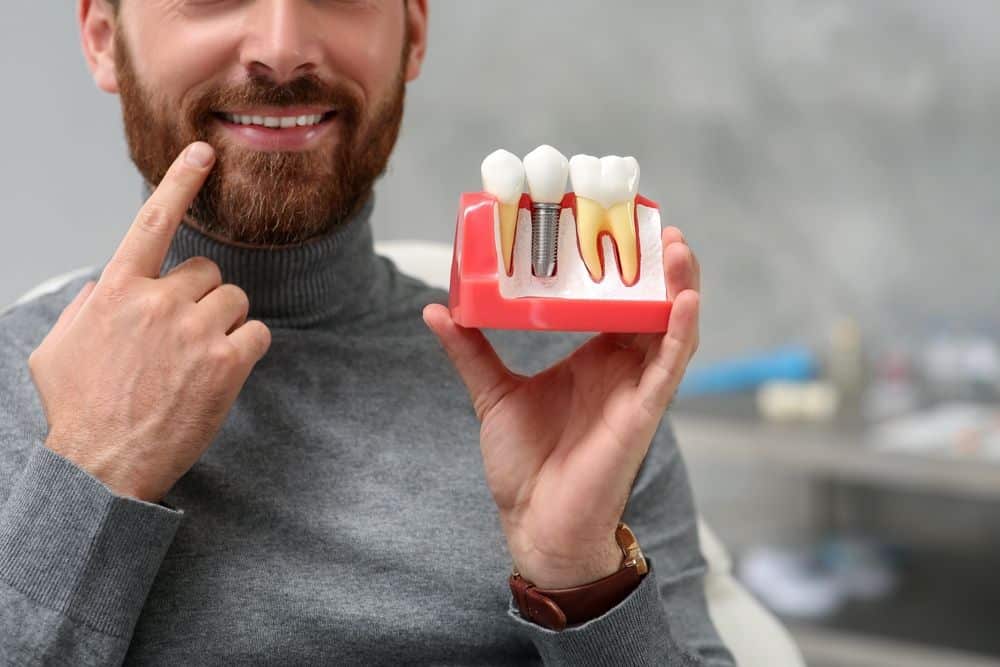
A dental implant is a titanium post placed into the jawbone at the site of a missing tooth. The surface of the implant is designed to bond with the surrounding bone through osseointegration, becoming physically integrated into the jaw over a period of several months.
Once integrated, the implant transmits force into the bone during chewing in a way that’s functionally similar to a natural tooth root. This restores the mechanical stimulus that the bone needs to maintain its density and volume.
Research in implant dentistry has consistently found that implants placed after tooth loss preserve bone volume in the implant site more effectively than sites restored with bridgework or left without replacement. The implant doesn’t just fill the visible gap. It addresses the underlying biological process.
The Timing Question
One of the practical implications of this is that timing matters when it comes to replacing a missing tooth. The longer a gap is left without a replacement, the more bone is lost. And the more bone is lost, the more complex implant placement becomes, sometimes requiring bone grafting before the implant can be placed.
Bone grafting is a routine procedure and is performed at Linden Market Dental Centre when needed, but it adds time and cost to the process. Patients who address a missing tooth earlier generally have more straightforward implant placement because more bone volume is available.
This doesn’t mean patients with long-standing gaps are out of options. Implants can be placed successfully with grafting in many cases. But it’s worth understanding that waiting isn’t neutral from a bone volume standpoint.
Implants Compared to Other Replacement Options
Bridges replace the visible tooth by anchoring an artificial crown to the adjacent teeth. They restore appearance and function but don’t address bone loss in the gap area because there’s no root substitute in the bone.
Dentures, as mentioned, rest on the soft tissue and bone surface. Full dentures in particular can accelerate bone resorption in the areas they cover because they place pressure on the bone surface without providing the internal stimulation of a root.
Neither option is without merit for the right patient. But for patients whose primary concern is long-term bone maintenance and preventing the facial changes that accompany progressive bone loss, implants are the option that addresses the problem at its source.
What the Implant Process Involves at Linden Market Dental Centre
Dr. Winchar places and restores dental implants as part of the restorative dentistry services at Linden Market Dental Centre. The process involves:
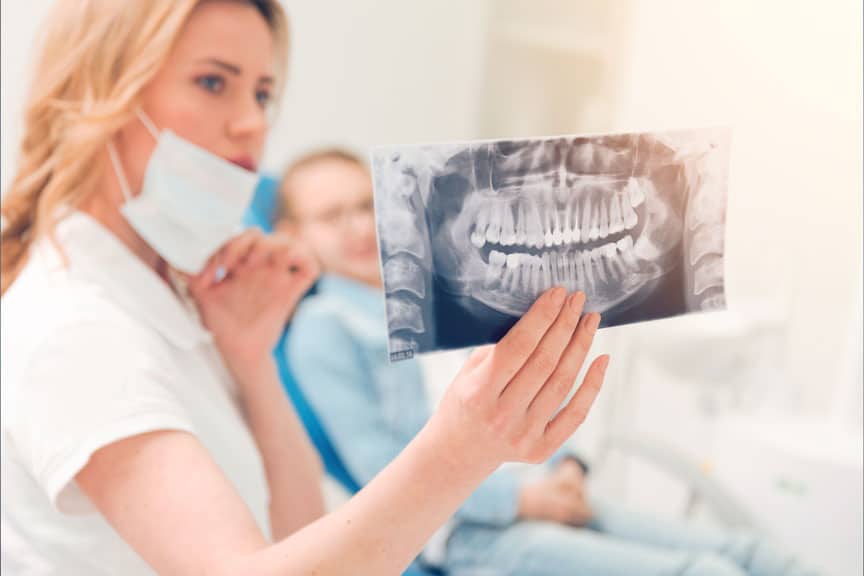
- An initial assessment, including X-rays to evaluate bone volume and implant site
- Implant post placement, followed by a healing period of several months for osseointegration
- Placement of the abutment and final crown once integration is confirmed
Patients are reviewed throughout the healing process, and the timeline is adjusted based on individual healing.
Linden Market Dental Centre accepts the Canadian Dental Care Plan (CDCP). Coverage for implant treatment varies by plan, and the team can assist patients in understanding what their specific plan includes.
About Linden Market Dental Centre
Linden Market Dental Centre is located at 877 Waverley St, Unit 7, Winnipeg, MB R3T 5V3. Dr. Morgan Winchar graduated from the University of Manitoba Faculty of Dentistry and has built a family-based practice focused on general dentistry, cosmetic work, crown and bridge, and implants. The clinic is welcoming new patients from across Winnipeg.
Book a Dental Implant Consultation at Linden Market Dental Centre
If you have a missing tooth and want to understand what implant treatment involves and whether it’s appropriate for your situation, the team at Linden Market Dental Centre is available for a consultation.
Call (204) 487-2226 to book your appointment.
- Book a dental implant consultation at Linden Market Dental Centre in Winnipeg
- Call us to discuss bone loss, timing, and implant options with Dr. Winchar
- Schedule an appointment at our Waverley St dental clinic in Winnipeg
- Contact Linden Market Dental Centre to ask about CDCP coverage for dental implants
- Request your new patient exam at our Winnipeg dental office today.